

- Pradha Homecare
- 19 Nov, 2025
- ICU Home, Uncategorized
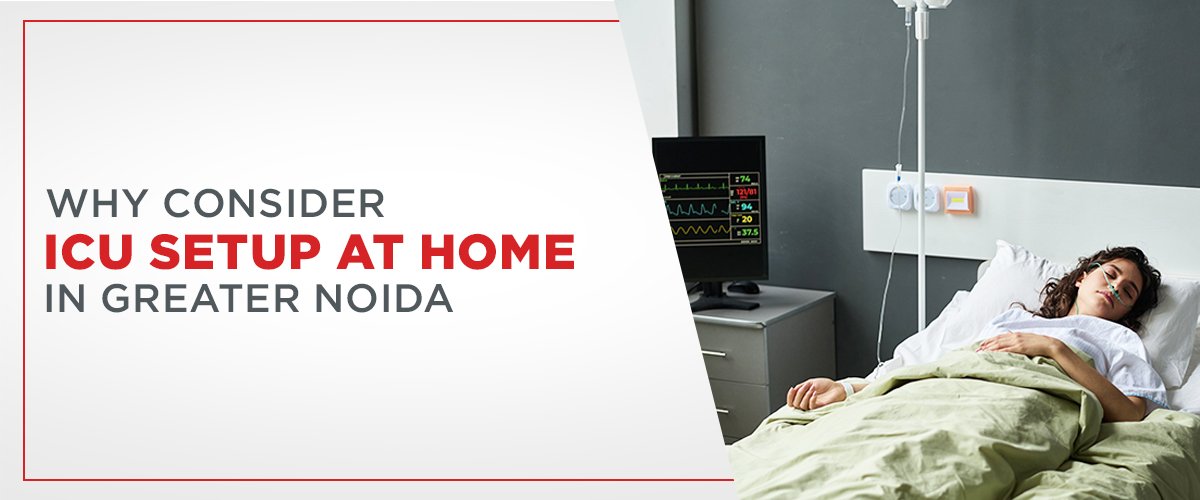
Why Consider ICU Setup at Home in Greater Noida
When critical medical conditions require intensive monitoring but hospitalization isn’t necessary or desired, Advanced ICU Solutions at home provide a revolutionary alternative that combines hospital-grade care with the comfort of familiar surroundings. The Critical Care at Home Services in Noida provides all Critical Care at Home which assure the families of Greater Noida to the provision of life-saving medical technologies, whilst not sacrificing the doctrinal support and personalized care that home settings alone can offer.
Require home based intensive care solutions? Call +91 7303425050 to Book ICU Setup at Home in Noida and provide your loved ones with hospital-quality care in comfortable surroundings.
Understanding Home ICU Requirements
The intensive care needs do not necessarily involve the sterility of hospital intensive care units. Most patients who have recovered acute medical incidences still require constant attention, specialized machines and skilled nursing services that are beyond ordinary home support. Now professional home health providers can provide full ICU systems, directly providing the hospital-level critical care in patients homes.
On the one hand, the choice to develop home ICU care usually occurs due to the need of patients to continue supportive maintenance of their life, to receive help in ventilation, and regular monitoring of vital signs but to no longer be urgently assisted in the hospital environment only. The method is especially useful with post-operative patients, even patients having undergone a recent cardiac operation, such as angioplasty, and the patients that have to live with a chronic respiratory condition.
Familiar home settings with family members are usually more conducive to recovery processes than in the institutions where patients may feel lonely or even panicked. Homecare teams of professionals are aware of this psychological benefit, and they create ICU facilities in ways that would maximize medical efficacy and patient comfort.
Comprehensive Equipment and Technology Integration
Life Support Systems
Current house ICU systems have advanced medical devices that are comparable to hospital ICUs:
>Portable ventilators to offer respiratory care to patients.
>The breathing assistance machines include BiPAP and CPAP.
>Heart rhythm monitors to be used continuously.
>Accurate delivering pumps of medication.
>Respiratory therapy- oxygen concentrators and cylinders.
>Airway clearance Suction machines.
Such sophisticated systems will provide patients with an equivalent level of monitoring and care they would have obtained in the hospital environments with the added advantage of one-on-one nursing services.
Driving Aids and Safety Systems.
The professional home ICU services contain elaborate monitoring solutions that give current-time data to the medical teams. The use of continuous vital monitoring, the automated notices of any change of parameters, and the direct conversation with the healthcare providers will guarantee the rapid response to any change in the state of patients.
Professional nursing work combined with the use of modern technology forms safety nets that in many cases surpass the hospital ICU, where nurses can be left with several patients at a time. Qualified nurses of critical care provide home ICU patients with all possible attention as they are dedicated to the patients.
[People Also Like To Read: Home ICU vs Hospital ICU: Key Things to Know in East Delhi]
Advantages of Home-Based Critical Care.
Individualized Medical Care
The problem with the staffing ratio in hospital ICUs is that it may make it difficult to provide personal attention to the patient. At home ICU installations, the unit has full attention to single-patient critical care nurses, who are fully dedicated and attentive to their patients:
>Timely responding to medical change or emergencies.
>Premeditated individual care plans.
>Constant surveillance with no conflicting interests.
>First hand communication with the treating physicians.
>Education and support in the family when recovering.
Such a personalized treatment tends to lead to improved patient care and recovery rates in comparison with conventional inpatient care.
>Value and Cost-Effectiveness.
The home ICU services are usually much cheaper than the hospital intensive care with better personal care. Families save on:
>Charges on accommodation and facility in the hospital.
>Less disruption of work of family members.
>Elimination of commuting costs and parking costs every day.
>Reduced chances of hospital acquired infections.
>Specialized care packages on a case-by-case basis.
Financial gains are especially valuable in the case of prolonged recovery that can become very expensive in the hospitals.
>Support and Family Integration.
Home ICU care provides the family members with the chance to be deeply involved in the process of recovery of their loved one. In comparison to home care that is restricted to a hospital, all of the above are not restricted by the hospital.
>Emotional support and constant availability of family.
>Becoming an active participant of care decisions.
>Education on the book of necessary care methods.
>Keeping family regulars in the vicinity of medical attention.
>Minimized pressure and nervousness among patients and families.
This family engagement usually plays an important role in enhancing patient outcomes and their general satisfaction with the quality of provided care.
Specialized Critical Care Services
Post-Cardiac Procedure Support.
Heart patients recovering after heart operation and angioplasty as well as any other operation on the heart may need intensive monitoring in their recovery process. Home ICU arrangements are special cardiac care arrangements such as:
>Constant checks on the heart rhythm with ECG.
>Medication correction and blood pressure management.
>Surgical wound dressing change and care.
>Research of activity and gradual recovery assistance.
>Cardiac event emergency response plan.
With professional nurses who are trained in cardiac care, it is seen that recovery is practiced safely besides the patients enjoying psychological advantages of being in the support of family.
Respiratory Critical Care
Special respiratory ICU configurations are beneficial to patients with chronic respiratory conditions, patients who have recovered, had lost lung capacity or patients on ventilators. These include:
>Management of ventilators, weaning.
>Maximization and observation of oxygen treatment.
>Pulmonary secretion and clearance of the airway.
>Exercise supervision in breathing.
>Respiratory distress emergency response.
High-tech respiratory systems and developed nursing care are very effective in giving all-round nursing care to even the most difficult breathing disorders.
Neurological Monitoring
Home ICU can be provided to patients that have gone through strokes or brain injuries, or are around to undergo neurological surgery:
>Neurological examination and cognitive therapy.
>Precautions and protocols during seizure.
>Rehabilitation and mobility assistance.
>Cognitive stimulation and communication therapy.
Such special treatment will make sure that the neurological patients will be provided with proper kinds of monitoring as well as enjoy the comfort of familiar surroundings that can restore some favorable effects cognitively.
Quality and Professional Standards.
Home ICU services ensure high quality of services addressed by extensive staff education, maintenance of equipment, and patient safety procedures. Healthcare providers operating in the profession make sure that all equipment are being regularly serviced, staff nurses are being continuously educated in critical care and emergency response protocol is being regularly revised and updated.
Technology combined with human expertise helps to form care environments that could frequently exceed the hospital ICU standards. Patients are attended to by patient-oriented nurses, face-to-face consultation with physicians, and family support that adds to the better outcome and satisfaction.
Want to keep your family together during critical care? Call +91 7303425050 to explore Home ICU Solutions Near Me in noida that prioritize both medical excellence and family unity.
[People Also Like To Read: Bringing the ICU Home: Critical Care Solutions in East Delhi]
Conclusion
The evolution of critical care has made Advanced ICU Solutions at home a viable, often superior alternative to traditional hospital intensive care. When families choose to Book ICU Setup at Home in Noida, they provide their loved ones with hospital-quality medical technology combined with personalized attention and family support that institutional settings cannot match. Access to Critical Care at Home Services in Noida ensures that even the most complex medical conditions can be managed safely and effectively in comfortable home environments, while Home ICU Solutions Near Me in Noida bring peace of mind to families facing difficult medical situations by combining professional expertise with the healing power of home.
FAQs
1.What is the comparison of home ICU cost and costs of hospital ICU?
Ans: The cost of home ICU services comprises of 40-60% of hospital ICU and offers high personal attention and treatment.
2.Is it possible to train family members on how to help with ICU equipment?
Ans: Professional nurses will educate the family members on the basics of operating equipment, emergencies, and referral of medical teams when in need.
3.What in case of an emergency scenario of the home ICU care?
Ans: The home ICU services provide emergency response guidelines, direct physician interaction and an expedited transfers in case the hospitalization is required.